When we launched Pulse, we had the problem every new product has: nobody knew it existed. We needed to reach the right businesses, one at a time, with emails that read like a person wrote them. And we needed to do it without wrecking the reputation of the domain we were sending from.
The tools we looked at fell into two camps. Some were built for sales teams with someone in operations to run them: sequences, variables, warm-up add-ons, a dozen settings before the first email goes out. Others were built for sending to big lists, which is exactly what we didn’t want to do.
So we built our own. It started as a rough console that only we used, and over a few weeks it grew the things we kept needing: a way to write a genuinely personal email for each business, a send schedule that looks like a person working through their inbox, follow-ups that stop the moment someone replies, and a single place to read the answers.
What we learned
Most of the work in cold email isn’t the writing. It’s the care: checking the address is a real business address, adding a proper footer and an easy opt-out, spacing emails out, warming up a new mailbox slowly, and stopping the moment something looks wrong. Get that wrong and it doesn’t matter how good the email is, because it lands in spam.
That’s the part we’ve made automatic in Buckshot, and it’s the part you can’t switch off.
Why hand it over
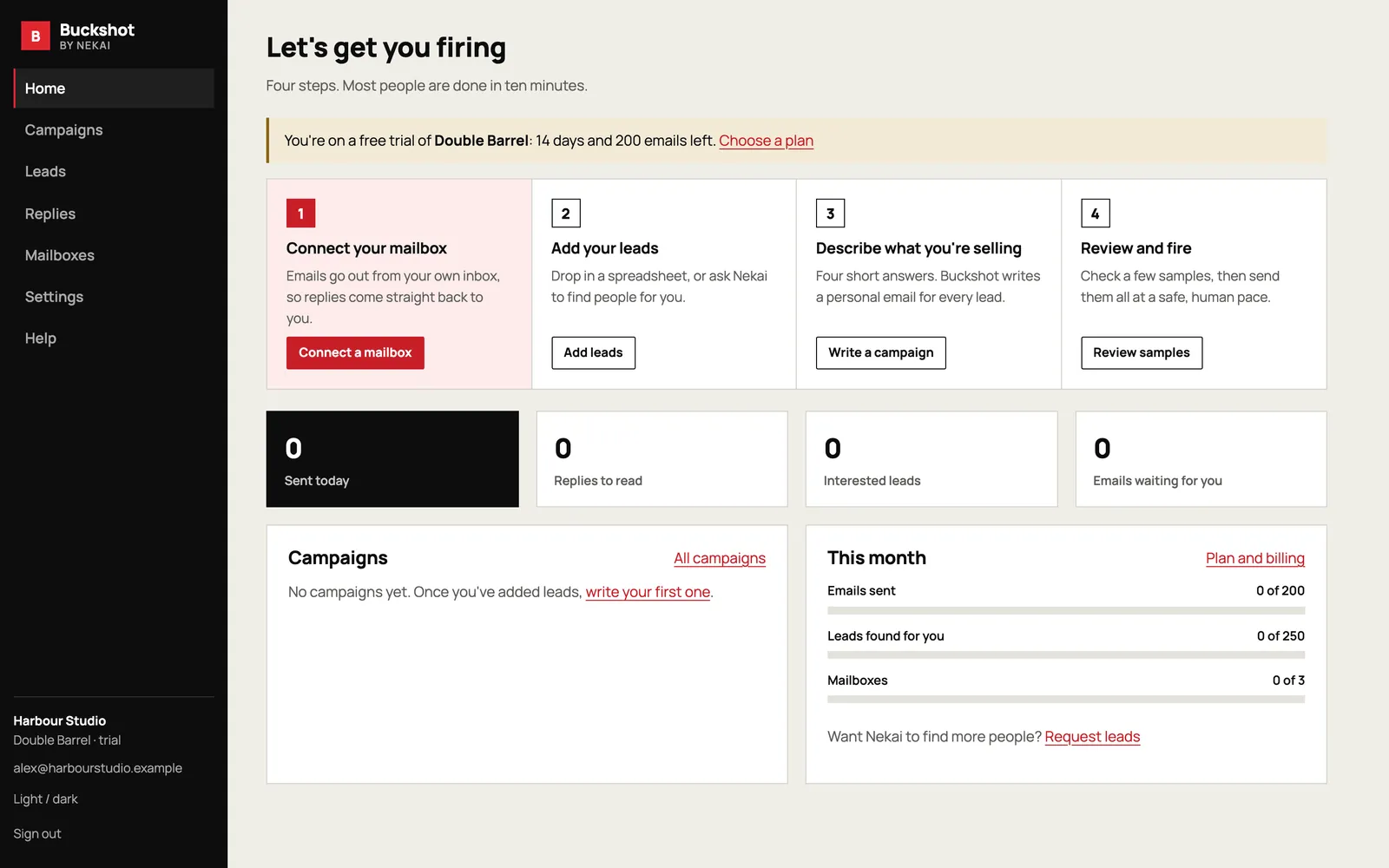
Because the people we talk to have the same problem we had. Founders, small marketing teams and agencies who know exactly who they want to reach, but don’t want to become email engineers to do it. Buckshot asks for four short answers about what you sell, writes an email for every lead, and lets you check a few before anything goes out.
On the bigger plans we’ll go one step further and find the leads for you, the same way we research our own.
We’re opening Buckshot to a small first group so we can help each of them set up properly. If you’d like to be one of them, register your interest.